The Evolving Network: DAA and D3.1Enhanced Technology Deployments
Aurora Networks DAA nodes and D3.1E technology are transforming access networks.
Access Network Technologies have evolved at an increasingly rapid pace over the past five years, providing cable operators with significant improvements in network capacities and throughput speeds.
But for networks still operating at 1 GHz bandwidths and lower, many of these new technologies—which include Distributed Access Architectures (DAA), Node PON, virtualized headend operation, and mid-split and high-split DOCSIS® 3.1 operation—are often not viable. Additionally, these new technologies have rendered much of the older equipment in both the headend and the outside plant obsolete. As this older equipment reaches end of life, and aging plants are unable to take full advantage of newer technologies, cable operators in these scenarios are faced with the significant challenge of modernizing and optimizing their networks without disrupting services or incurring excessive capital expenditures.
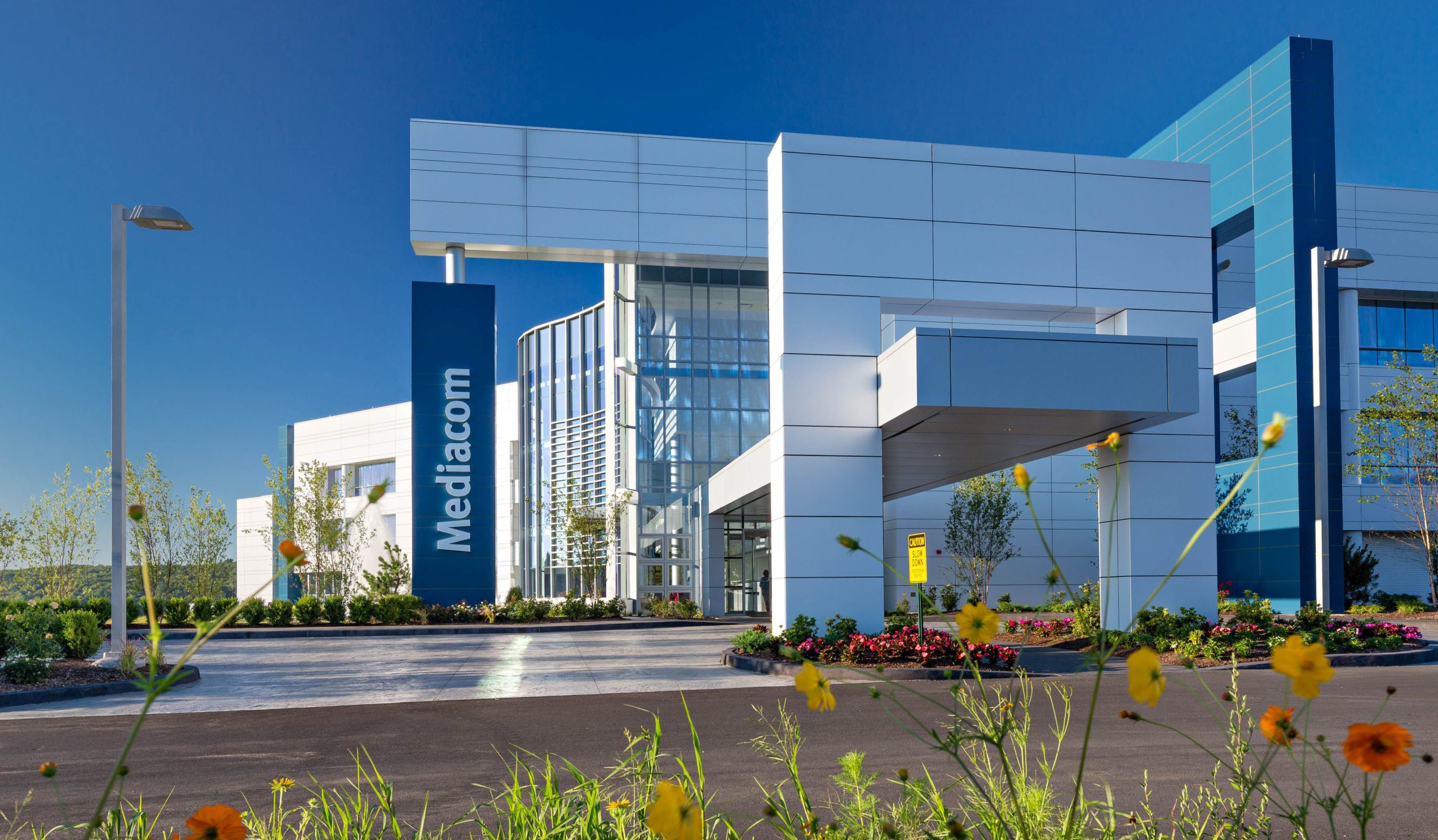
Mediacom, a regional telecommunications service provider based in Mediacom Park, New York, chose Aurora Networks Remote MACPHY (RMD) Distributed Access Architecture (DAA) nodes and D3.1Enhanced (D3.1E) technology to upgrade the entirety of its sub-split access network. Mediacom’s upgrade project consists of two phases: in Phase 1, currently in progress, Mediacom will transition from analog to IP video delivery to reclaim network bandwidth; upgrade the access network to support 204/258 MHz high-split operation; and deploy Remote MACPHY DAA nodes. The Phase 1 upgrades will support 2x1 multi-gigabit broadband service tiers. In Phase 2, Mediacom will leverage the DAA node deployment to incorporate D3.1E technology—which, operating in conjunction with next-generation DOCSIS 4.0 modems, expands the number of OFDM DS channels the network can support—to extend multi-gigabit service beyond 2x1 service tier capacity.
Objectives
- A new, modernized access network that optimizes performance, expands bandwidth, and maintains competitive value proposition with subscribers by supporting multi-gigabit service tiers
- Replacing active nodes nearing obsolescence with new, RMD-capable DAA nodes to prevent aging nodes from potentially impacting network performance
- Leveraging the access network upgrade and RMD node deployments to expand network speed and capacity beyond the initial 2x1 multi-gigabit per second service tiers to extend the life of these upgrades and maximize ROI
Solution
- Opti Max® OM4120® nodes with RD2322 Remote MACPHY modules
- D3.1E Technology
Benefits
- Proactively addressing potential points of failure in the network by replacing aging and obsolescent equipment.
- Improving operating efficiencies in the network, including higher modulation rates, reduced operational complexity, and a more efficient use of the network’s power budget without having to increase or reallocate powering resources.
- Maintaining a competitive advantage now and in the future in markets where other operators are offering multi-gigabit services, especially markets in which the competition has deployed FTTH overbuilds.
- Maximizing ROI on Phase 1 network upgrades and significantly extending their usefulness, while keeping pace with competitors offering similar premium Gigabit speed tiers at a fraction of the costs associated with FTTH overbuilds.