
Multiview TV Powered by the Video Stitching Engine®
Increase the perceived value of Advanced TV services, drive acquisition, and reduce churn
Multiview TV powered by the Aurora Networks™ Video Stitching Engine® (VSE) is a powerful differentiator for video service providers who want to add value to their Advanced TV products, especially exclusive sports content. It’s a compelling and economical way to engage viewers, drive growth, and maximize ROI for Advanced TV services.
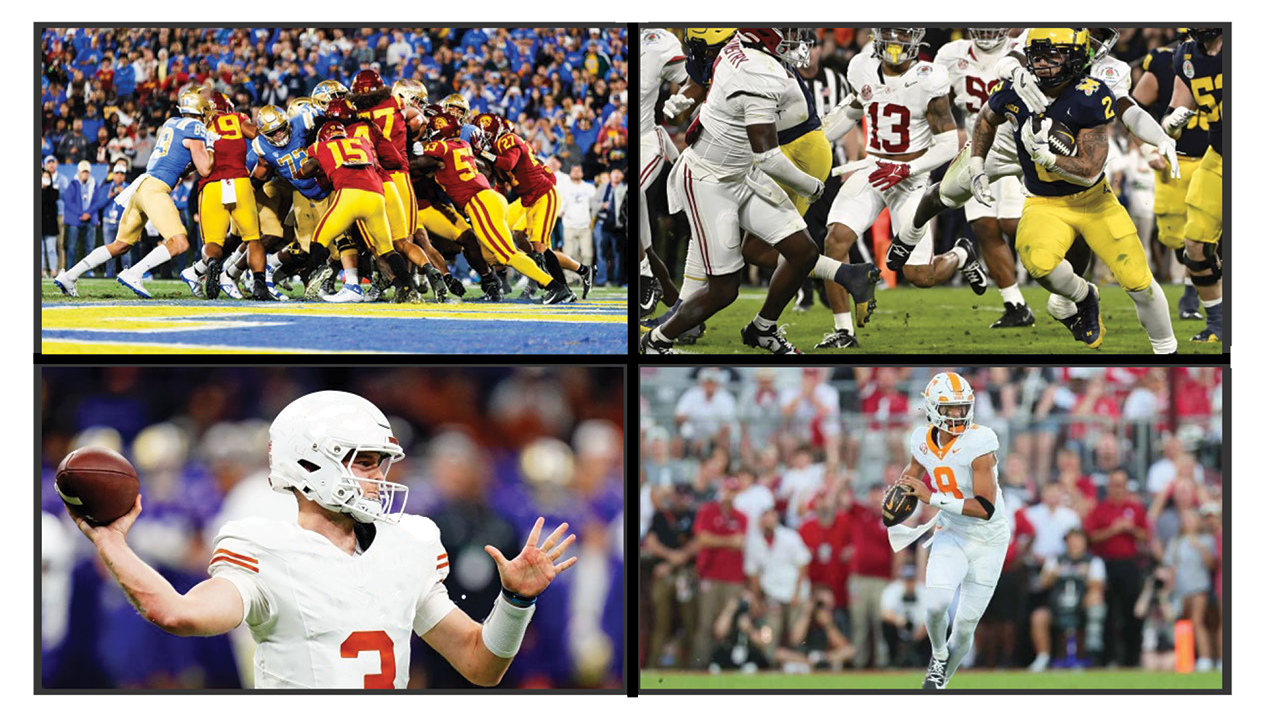
What’s Multiview TV? It’s one of the most powerful Advanced TV features: an ideal way to set Advanced TV subscription services apart from the competition in an increasingly crowded marketplace. Multiview TV enables viewers to watch multiple channels, VOD streams, or camera angles—typically up to four views at once—on a single screen. Additionally, some (but not all) Multiview services have a variety of options for customizing a subscriber’s Multiview feed; the subscriber can, for example, change screen sizes or switch between audio feeds for different views. Multiview TV is therefore a far more interactive—and potentially engaging—experience for viewers than traditional, single-screen cable or streaming viewing.
That’s why The Aurora Networks Multiview TV solution can provide video service providers with a distinct competitive edge. With a unique set of features and capabilities that simplify deploying, configuring, and monetizing Multiview, Aurora Networks Multiview TV can help video service providers deliver compelling, engaging Multiview programming efficiently and economically while maintaining Quality of Service (QoS) for their subscribers.
Key Advantages
Key Advantages
Premium sports content is one of the key drivers behind the shift towards Advanced TV services by consumers. While sports content has always been a selling point for pay TV subscriptions, the old viewing paradigm of simply watching live games in real time is rapidly evolving.
Aurora Networks Multiview TV is uniquely positioned to take advantage of these expected changes in sports viewing, not just through sports apps themselves but also through several other features unique to Advanced TV content, including:
-
Multi-device capability
-
Immersive, interactive content
-
Personalized viewing experiences
These features take the sports viewing experience beyond just live events to include the ability to watch multiple live events, engage with other fans as the game transpires, and place bets in real time through sports betting apps.
But Multiview TV’s advantages aren’t just about sports-related content. Video service providers can also leverage VSE-generated Multiview TV products (both sports and other content) to create new revenue streams by marketing around Multiview’s ability to provide personalized viewer experiences, which not all Multiview platforms currently on the market can support. Potentially, new ad opportunities alone can provide video service providers with superior ROI from a Multiview TV deployment over Ads delivered using traditional techniques.
VSE-generated Multiview TV products support a wide range of these advertising opportunities, including:
-
Banner or interactive ads—the latter enabled by features such as QR codes or unicast VSE sessions—inserted into live content and targeted by channel, geographic regions, or metrics such as viewing patterns and previous engagement with ads gathered from individual users.
-
Video service providers can obtain these kinds of valuable viewing metrics through the VSE platform, including the time and day subscribers access content and which Multiview products subscribers choose to watch—just one way Multiview TV can drive revenue growth and enhance ROI.
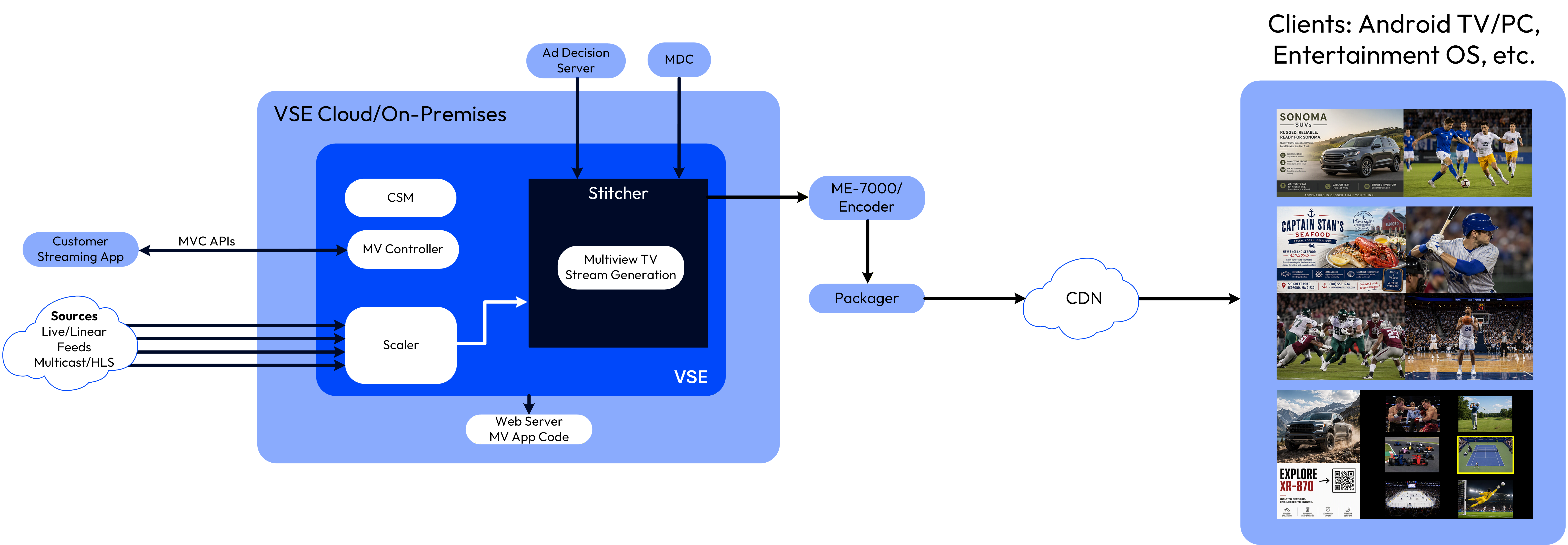
VSE Multiview Ad Insertion Architecture Diagram
Powered by VSE
The Aurora Networks Multiview TV solution is powered by the Video Stitching Engine (VSE), a power platform for personalizing existing video and creating applications and graphics that are delivered as standard video streams.
-
Content creation on VSE can be automated and scripted, and the VSE TV apps can be navigated in real time with client integration
-
These TV apps can generate video products that support a wide variety of subscriber use cases, including Multiview TV, interactive ads, Advanced TV delivery, and personalized program guides
-
The VSE’s app-based architecture enables video service providers to configure their IP video platforms based on their business needs by picking and choosing which VSE apps to integrate and deploy
VSE has a variety of deployment options, including:
-
On-premise
-
Cloud
-
Hybrid platforms
From these platforms, VSE can deliver content to virtually any device, including:
-
Legacy set-top boxes (via virtualization, which enables these devices to access new, IP-based services)
-
Next-generation set-top boxes
-
Common streaming devices
-
Connected TVs
Since VSE can convert Adaptive Bitrate (ABR) video to traditional MPEG transport streams, it offers a unified viewing experience. The result? Graphically sophisticated video, ad, and information options for subscribers.
How it Works
The VSE platform uses two components that interact to create Multiview output: the Scaler and the Stitcher.
To create Multiview output, the Scaler first intercepts multicast video source feeds from the headend. Next, the Scaler processes these feeds and scales down the image from a standard, full-screen ratio to an output size that will fit a specific 2-tile, 3-tile, or 4-tile Multiview layout. The Scaler can also scale multiple multicast outputs simultaneously into the resolution required by the Multiview output.
Next, the Stitcher—the primary rendering component for Multiview output—ingests the scaled video feeds from the Scaler. The Stitcher then constructs a single Multiscreen view from these scaled feeds. During this step, the Stitcher integrates any User Interfaces and other pictures, data, or graphics that may be required and synchronizes audio and video across the scaled-down multicast feeds. After compositing the Multiview output, the Stitcher sends it to the video service provider’s encoder and packager for grooming and packaging into the target ABR format. From here, the Multiview output is made available on the delivery network, where subscribers can access the content from IP-connected devices.
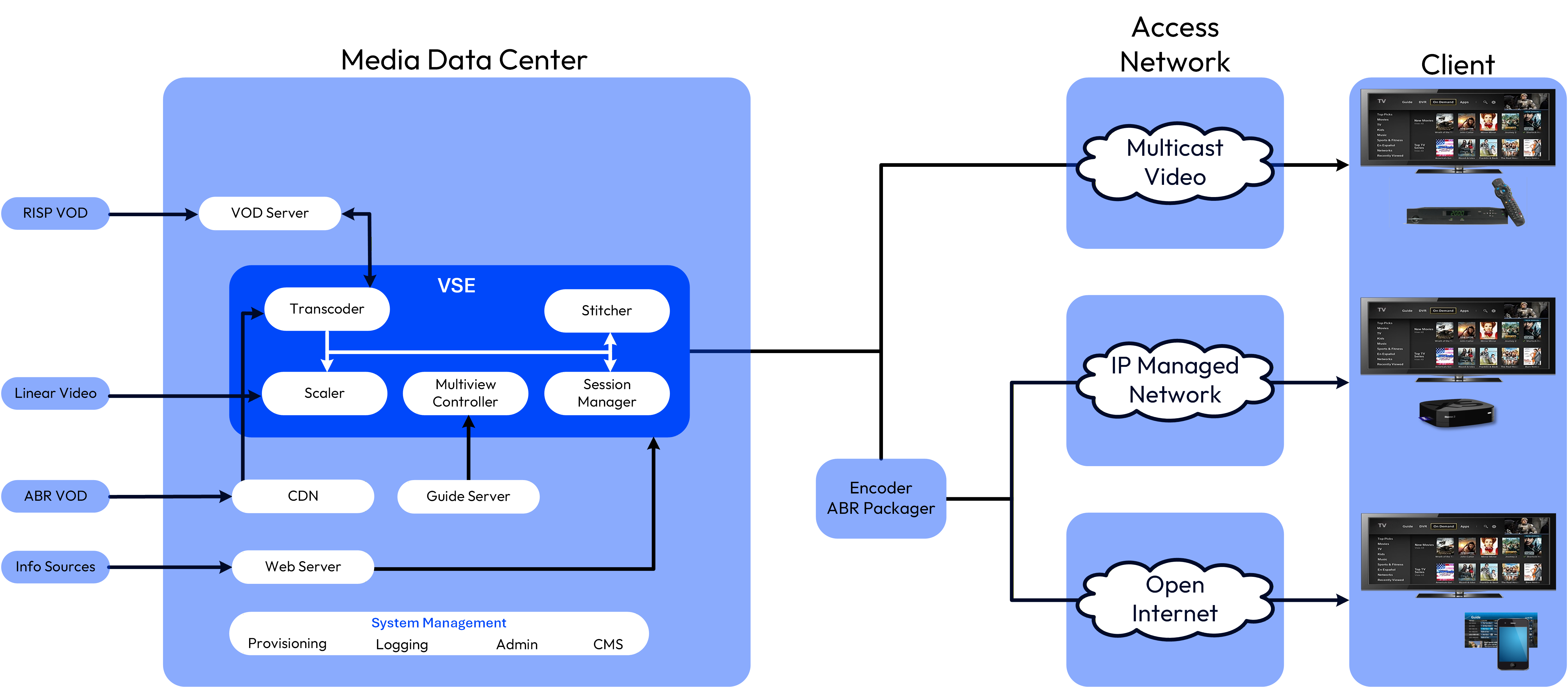
VSE Multiview Architecture Diagram
Centralized Multiview Compo...
Multiview products can be delivered to subscriber devices via one of two architectures.
-
Client-Side architectures deliver each of the individual channels in the multiview as independent streams to the subcriber device, where the streams are composited and synchronized
-
Server-Side architectures, where the different video streams are composited and synchronized into a single, encoded output stream from a central server location
The Aurora Networks Multiview TV solution uses a Server-Side architecture that resides in the VSE core and centralizes Multiview decoding and compositing tasks: in general, the most efficient and cost-effective of transforming Multiview from a high-bandwidth, premium feature into an operationally scalable, full-footprint service tier.
The benefits of Server-Side architectures include:
-
Lightweight client resource requirements, which enables video service providers to fully deploy Multiview services to nearly any device in subscribers’ homes
-
Optimized bandwidth usage, thanks to the delivery of a single, composited Multiview stream to subscribers’ devices
-
Superior latency and synchronization via a single encode pipeline
-
A more optimized and scalable architecture with a functional split for Multiview processing across server systems and client devices
-
A consistent, unified platform for maximizing potential ad revenue and fully monetizing Multiview products
Why Aurora Networks?

A Long History of Video Innovation
Aurora Networks has pioneered a multitude of award-winning industry breakthroughs. From the first operational all-digital HDTV system to pioneering Content Security and DRM solutions, our thirty years of excellence in designing video delivery solutions speaks for itself.
Other key innovations include:
• First MPEG-2 and MPEG-4 digital ad insertion
• First to demonstrate HEVC compression system
• First wireless broadband gateway

Cutting Edge Solutions for Today's Advanced TV Deployments
Aurora Networks' history of innovation continues with our Multiview TV powered by VSE Solution. Driven by decades of experience working with the world's largest pay TV providers, Multiview TV supports a deep set of personalized, regionalized channels and features that can set your Multivew TV products apart from the competition.

A Managed Transition to Multiview TV
Aurora Networks' team of systems integration experts can help video service providers make the transition to Multiview TV Video quickly and economically. Our experts work closely with video service providers to minimize risk and maximize efficiency via a wide range systems integration strategies, providing customers with a customized Multiview TV system that uses the best Aurora Networks and/or third-party products to fit their business goals and match their system design needs today, while also laying the groundwork for seamless upgrade and system expansion in the future.

Manifest Delivery Controller
Video Manifest Manipulator for Ad Insertion and Personalization
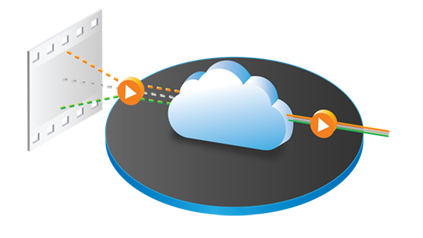

Video Content Manager (VCM)
A field-hardened, highly configurable, purpose-built system that optimizes content workflows and video operations

Video Stitching Engine (VSE)
Preserve the value of a pay-TV bundle, without replacing an installed-base of set-tops, while adding new streaming and OTT services
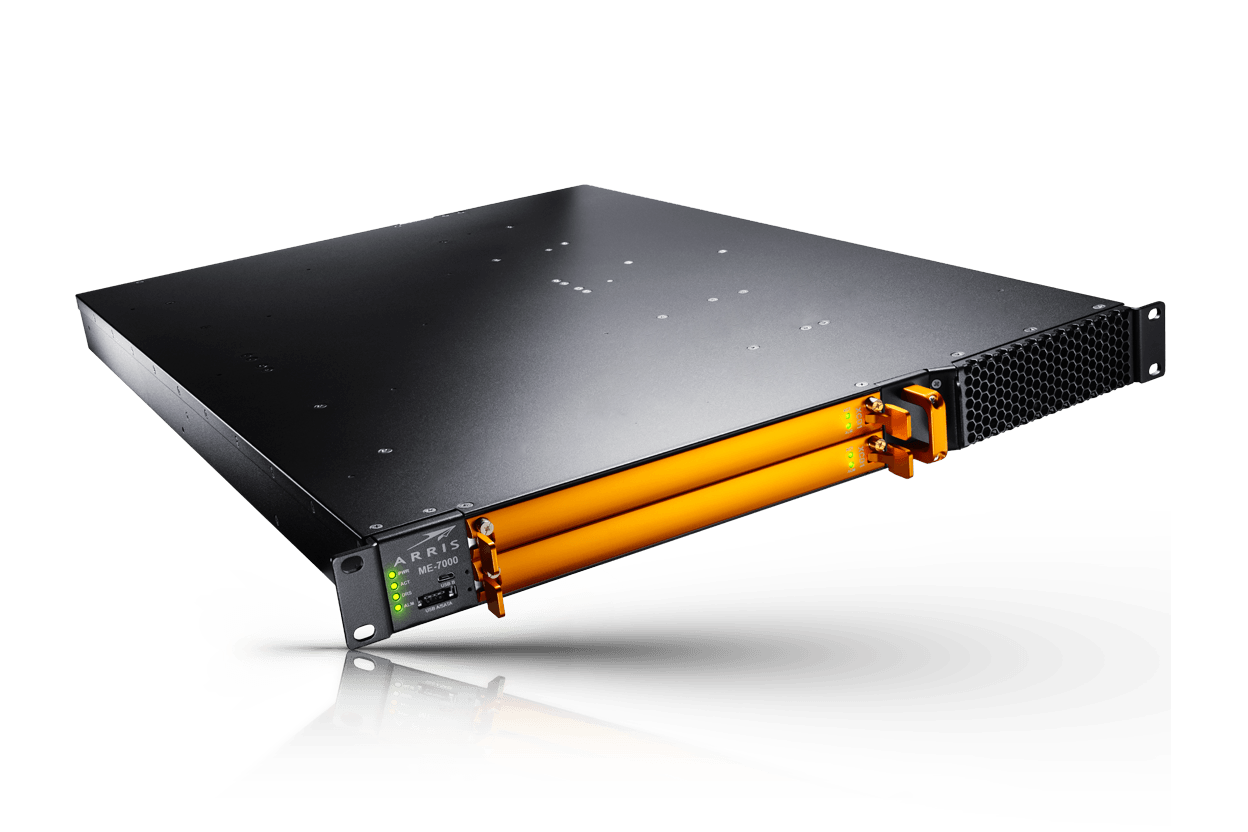
ME-7000 Converged Compression Platform
High density modular multi-video format encoder, transcoder with grooming, splicing and multiplexing.
Featured resources
An Introduction to Multiview TV
Blog
|
Who says you can't have (or see) it all? Learn more about Multiview Solution, |
The Competitive Advantages of Multiview TV
Solution Brief
Learn more about the competitive advantages of Multiview TV powered by VSE.
Overcoming the Top 5 Challenges in Server-Side IP Ad Insertion
e-Book
Learn how agile manifest manipulation can help you improve monetization and deliver a "real TV" experience.